



Manual palletizing is one of the most physically demanding jobs found in a manufacturing environment. Operators face musculoskeletal strains from repeatedly lifting, lowering, reaching and twisting to place boxes on pallets for storage or shipping. They are also prone to fatigue-driven errors and face safety hazards from sharing space with moving equipment, such as forklifts. It’s a difficult job to do day in and day out, and it’s also hard to staff.
The Palletizing Cell That Couldn’t Keep Up
A high-volume, high-mix manufacturer of electrical components knew this all too well. Its palletizing cell couldn’t keep pace with the line’s demands and became a bottleneck.
The manual palletizing process looked like this:
- The cell required an operator to hand-load empty pallets onto a conveyor, increasing ergonomic risks, safety exposure and labor overhead.
- The existing cell was a pass-through design, with inputs and outputs located on opposite sides, creating inefficient material flow and aisle-management challenges.
- The cell also offered limited visual part tracking and poor robot/cell fault recovery, causing downtime when issues occurred and limiting operator insight into production status.
The manufacturer had an established relationship with Machine Concepts, having partnered with the custom automation equipment builder and integrator on multiple projects, the most recent at its Mexico facility in 2025. So when it came time to replace the aging palletizing cell, the company already knew Machine Concepts had the engineering depth to deliver.
From Fully Manual to Automated Palletizing
The manufacturer commissioned Machine Concepts to engineer and build a fully automated robotic palletizing cell tailored to its unique product mix, changeover requirements and floor layout. The new cell’s design would replace manual labor with automation and significantly improve overall safety and flexibility.
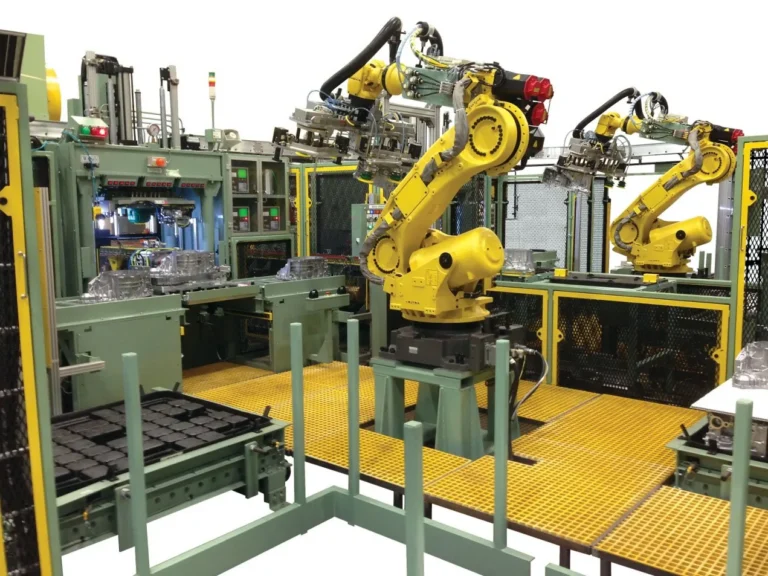
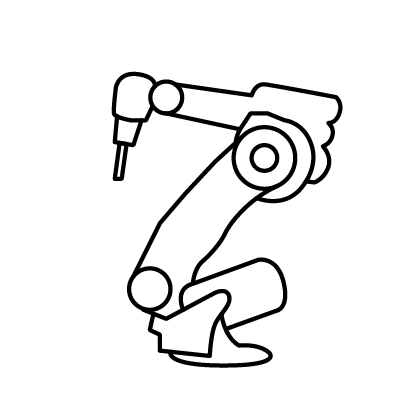
At the center of the new line is a Fanuc M-410iB/140H 5-axis industrial robot with an end-of-arm tool that uses vacuum capabilities to pick boxed case assemblies off an upstream conveyor and stack them onto pallets. It picks smaller box sizes two at a time and larger box sizes one at a time, optimizing flexibility without sacrificing precision.
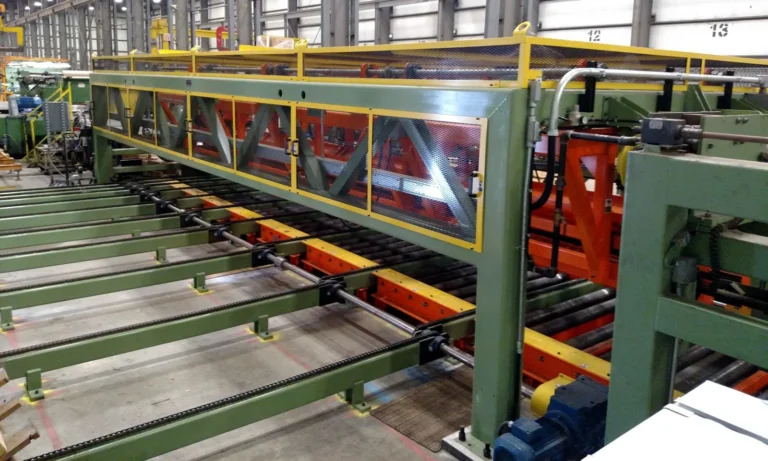
An automatic pallet dispenser replaced manual pallet loading, eliminating the need for an operator to load pallets by hand. Forklifts bulk-load stacks of up to 10 pallets, while the dispenser singulates one pallet at a time from the bottom of the stack and feeds it into the conveyor line. Operators can reload the dispenser at any time without stopping the robot, eliminating production interruptions. It also automatically adjusts its sidewalls during changeover when switching between the two pallet sizes.
The cell restructures how material moves in and out. Up to three empty pallets can queue in staging. Up to two completed pallets can wait in staging before removal. As a pallet enters the loading zone, it contacts a stopper and is crowded into position. The system then verifies that the pallet size matches the active recipe — a built-in quality check before palletizing begins.
The exit light curtain is self-muting, so completed pallets can travel through and be removed by forklift without stopping the robot — maximizing uptime.
Greater Flexibility, Safer Operation
The new cell allows for fully automatic changeover across 100 part numbers, nine box sizes, four layout patterns and two pallet sizes: 48” x 48” and 40” x 48”.
Safety has increased and ergonomic concerns have decreased since the manufacturer implemented automated palletizing, and the operator previously assigned to the line has since moved to a less physically demanding role.
The team consolidated material input and output to the same aisle side, simplifying forklift traffic and material flow. The cell also provides greater process visibility, with a new HMI that shows layer-by-layer palletizing progress in real time.
The project met its objectives, and the manufacturer expressed satisfaction with both the new cell’s performance and the implementation process.
Automatic changeover across 100 part numbers, nine box sizes and four layout patterns. An operator redeployed to a safer, less physically demanding role. This is what an engineered-to-fit solution looks like, and it’s exactly what Machine Concepts is built to deliver.
Fully Automated Palletizing Line: From Pallet Load to Finished Pallet Removal
- A stack of up to 10 pallets is loaded into a pallet dispenser with a forklift.
- The dispenser singulates one pallet from the bottom of the stack.
- A single empty pallet enters via a conveyor, while up to three pallets can queue in staging.
- Boxed case assemblies enter the cell from an upstream packaging machine via an existing conveyor.
- The Fanuc 5-axis robot picks one or two boxes based on size using vacuum end-of-arm tooling.
- The robot then palletizes the boxes according to the part number’s stacking routine, layer layout and layer count.