



Most plants have that one machine that is rapidly approaching the end of its service life.
It still runs, for the most part, but the repairs are never-ending. And the operator who knew it best retired three years ago, leaving behind a laminated sheet of numbers taped to the machine’s side panel that no one fully understands.
And the machine itself costs the company more than what the maintenance budget reveals.
The Cost No One Is Tracking
Deferred replacement always looks cheaper than it is. While capital costs are visible and immediate, the cost of keeping an aging piece of equipment in service is distributed across repair invoices and workarounds.
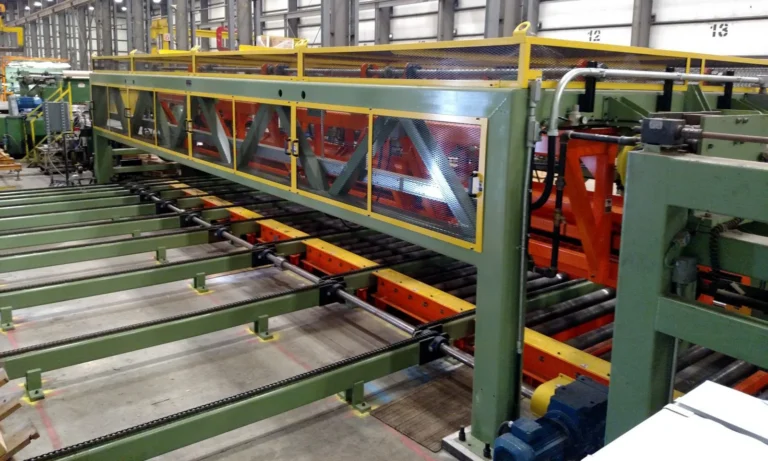
But those costs show up in ways that matter. Consider a tension leveler running at 63% of its rated capacity — it isn’t just an aging asset, it’s a throughput ceiling. Strip that can’t be properly shape-corrected before coating slows the line and produces inconsistent results that affect quality downstream. Parts that once took days to source now take weeks — or they can’t be found at all.
The maintenance team knows this. The plant manager suspects it. But until something forces the math out into the open, nothing changes. That forcing function looks different for every plant. For one major steel producer, it was a complete system failure.
What Forces the Issue?
A major steel producer acquired an existing paint facility and inherited its aging tension-leveling system. The equipment was 40 to 50 years old, mechanically limited and operating well below its rated tension capacity. And just like the opening scenario said, operators were running it off a sheet of numbers nobody could explain — there was no clear documentation, no context, no real understanding of what the settings were actually doing.
The team made it work until the bridle elongator drive system failed.
The line was down for more than a week. Deliveries went out late. The repair cost, combined with the downtime, almost certainly exceeded what a planned upgrade would have run — and the upgrade conversation had been on the table for years.
The decision that kept getting deferred finally happened. Just not on anyone’s terms.
Read the full case study to see how Machine Concepts engineered the solution.
How to Recognize the Warning Signs of Machine Failure
Machine failure rarely happens all of a sudden. Learn to read the warning signs that are typically visible before catastrophic failure occurs, and to recognize when failure is imminent, and it’s time to act.
| Situation | Keep Watching | Time to Act |
| Parts Availability | Lead times lengthening; some parts are hard to find but still sourceable | Critical components discontinued; repairs require custom fabrication or cannibalization |
| Operator Knowledge | Key operators have retired; institutional knowledge is partially documented | No one fully understands how the machine works; setup relies on undocumented workarounds |
| Throughput Capacity | Line speed limits are noticeable but manageable; workarounds help maintain acceptable rates | Equipment consistently constrains production targets; an invisible ceiling is capping output |
| Maintenance Cost | Repair spend is increasing year over year; more reactive repairs than planned | Annual maintenance cost approaches replacement amortization; unplanned downtime events multiplying |
| Quality Consistency | Occasional shape defects or rejects; caught internally before reaching customers | Persistent defects affecting output; rejects on the rise and customers starting to notice |
| Safety & Compliance | Safety systems require patches; risk managed but requires constant vigilance | Active safety concerns present; machine poses compliance risk; operators hesitant to run it |
Going through that list isn’t always comfortable. But the math tends to get clearer than you might expect. When annual maintenance spend starts approaching what amortized replacement would cost, the “keep it running” argument just doesn’t hold up.
When Machine Concepts Gets the Call
Machine Concepts enters the process at different points. Sometimes it’s early on — when a plant is running the numbers before anything fails. Sometimes it’s after a failure, when the conversation that had been deferred for years finally has to happen.
Either way, our starting point is the same: understand the existing footprint, what the line needs to do and what the budget reality is, then engineer a solution built around all three.
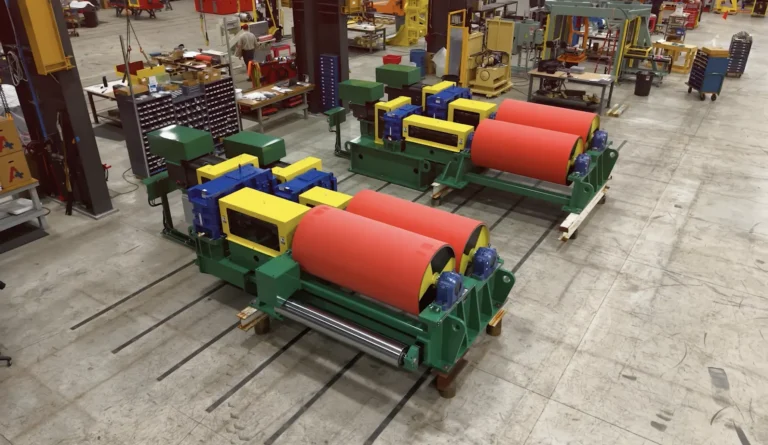
For the steel producer mentioned previously, that meant designing a completely custom bridle system to match the original roll positions rather than requiring a full line redesign. Four 36-in.-dia. x 72-in. face bridle rolls, driven through Sumitomo Paramax gearboxes with ABB Baldor motors, Kelk load cells and Hilliard caliper brakes. Machine Concepts assembled the system, shipped it in four units and provided 24-hour on-site engineering support through installation.
Tension capacity went from 11,500 to 25,000 lbs. Line speed reached 550 FPM. Throughput improved 83% on thicker products and 40% on thinner ones.
The operators running the line now understand their equipment. They know what the set points mean, and they’re no longer working off a mystery sheet.
Let’s Talk
If any of those signals look familiar, contact us. It’s worth having a conversation with one of our engineers now before something else forces it.